
Quality Standard
Quality Standards
We use the internationally recognized Acceptable Quality Limit (AQL) standard for all product inspections. For each inspection, this allows the client to set their acceptable quality tolerance levels.
Representing your interests in the factory, we inspect as per your specifications and/or sample(s) provided.
Acceptable Quality Limit (AQL)
The Acceptable Quality Limit, commonly referred to as AQL, is a method widely used to measure a production order sample to find whether or not the entire product order has met the client’s specifications. The customer then has the data to make an informed decision to accept or reject the lot.
We exclusively use ISO 2859 tables to measure AQL. These tables are a United States standard with equivalents in all national and international standardization organizations (ANSI/ASQC Z1.4, NF06-022, BS 6001, DIN 40080).
Your inspection report will clearly state if your production has passed or failed your selected AQL.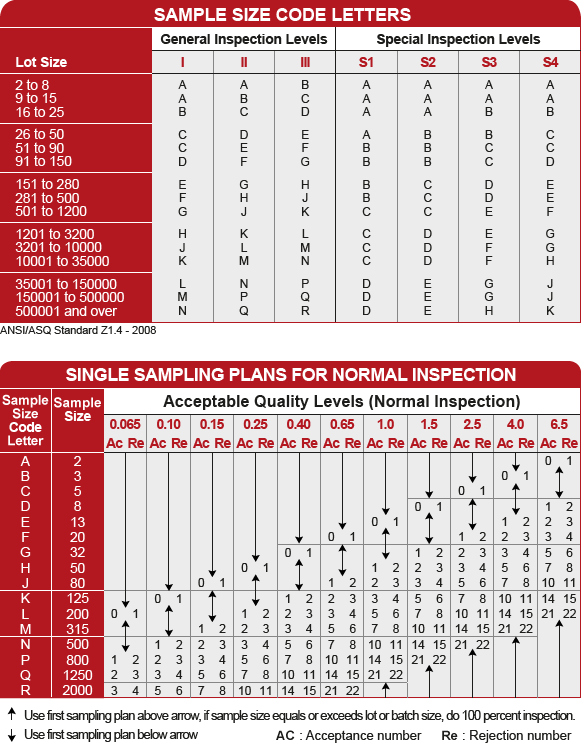
Defects found in inspection are classified into three categories: critical defects, major defects and minor defects:
1) Critical Defect:
A defect that is likely to result in hazardous or unsafe condition for an individual using the product or a defect that is contravening against mandatory regulations.
2) Major Defect:
A defect that is likely to result in failure of or reducing the usability of the product, value of the product or obvious appearance defects affecting the salability of the product.
3) Minor Defect:
A defect that doesn’t reduce the usability of the product, but nevertheless the workmanship is beyond the defined quality.